
The Challenge: Too Many Options, Too Little Clarity
Search for something as simple as "Eiffel Tower tickets" on most travel platforms, and you'll be met with a wall of near-identical listings: skip-the-line tours, sunset visits, combo packages with river cruises, guided versions, self-guided versions, and half a dozen variations in between.
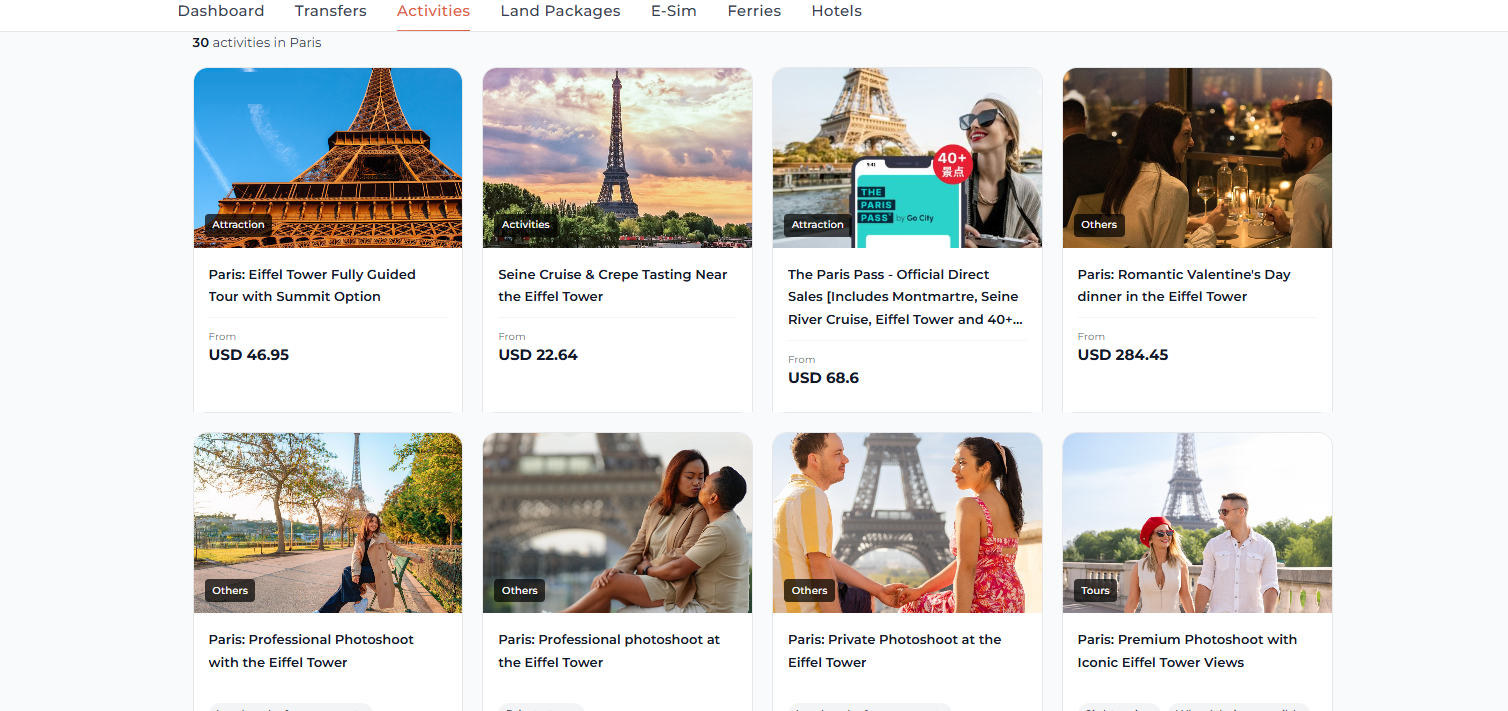
For a traveler, this is overwhelming. For a travel agent trying to book on behalf of a client, it's worse - it slows down a process that should take seconds, and it puts the burden of sorting good options from redundant ones entirely on them.
This is the paradox at the heart of activity distribution: more inventory doesn't automatically mean more bookings. If anything, an unstructured flood of choices does the opposite - it creates hesitation, second-guessing, and in many cases, drop-off before a decision is even made.
This isn't just intuition. In a well-known 2000 study published in the Journal of Personality and Social Psychology, researchers found that shoppers presented with 24 jam varieties made a purchase just 3% of the time, compared to 30% when shown only 6 - a finding that remains one of the most widely cited examples of choice overload in consumer psychology.
We saw this pattern repeat across destinations, not just marquee attractions like the Eiffel Tower. Our agent partners were spending unnecessary time comparing listings that, on the surface, looked nearly identical - with no clear signal on which one was the right pick for a given traveler.
The real challenge wasn't a lack of supply. It was a lack of structure around that supply.
The Solution: Cataloguing as a Conversion Tool, Not Just Backend Housekeeping
At Leamigo, we treat activity cataloguing as a core part of the booking experience, not an afterthought that happens behind the scenes. Our approach is built on two principles: guide the decision without limiting the choice, and keep every listing accurate, relevant, and current.
Signalling the Right Choice, Without Removing the Rest
Instead of presenting every activity as equally weighted, we use clear visual cues to help agents and travelers quickly identify a strong default option. Every alternative remains visible and bookable, but the decision no longer requires comparing ten listings from scratch. Someone in a hurry can book with confidence, while someone who wants to explore other options still has the flexibility to do so.
This is managed directly through our admin panel, which gives our team two key levers to shape how activities are discovered:
Assigning visual labels to activities: Highlight standout experiences with indicators like Most Popular or Top Rated, making them easier to spot without hiding other available options.
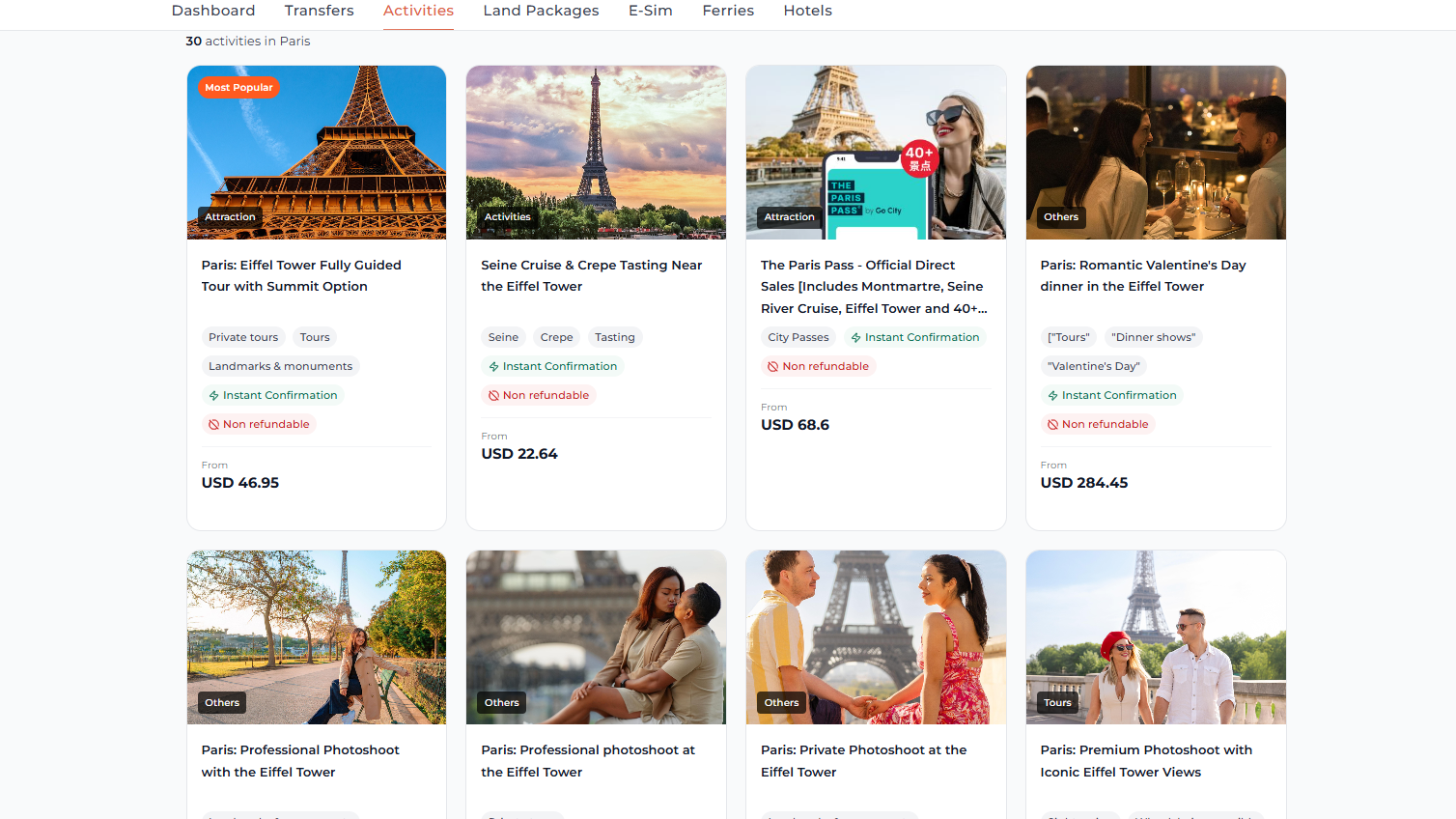
Ranking activities across city pages: Ensure the strongest and most relevant experiences appear first, instead of being buried among dozens of similar listings.
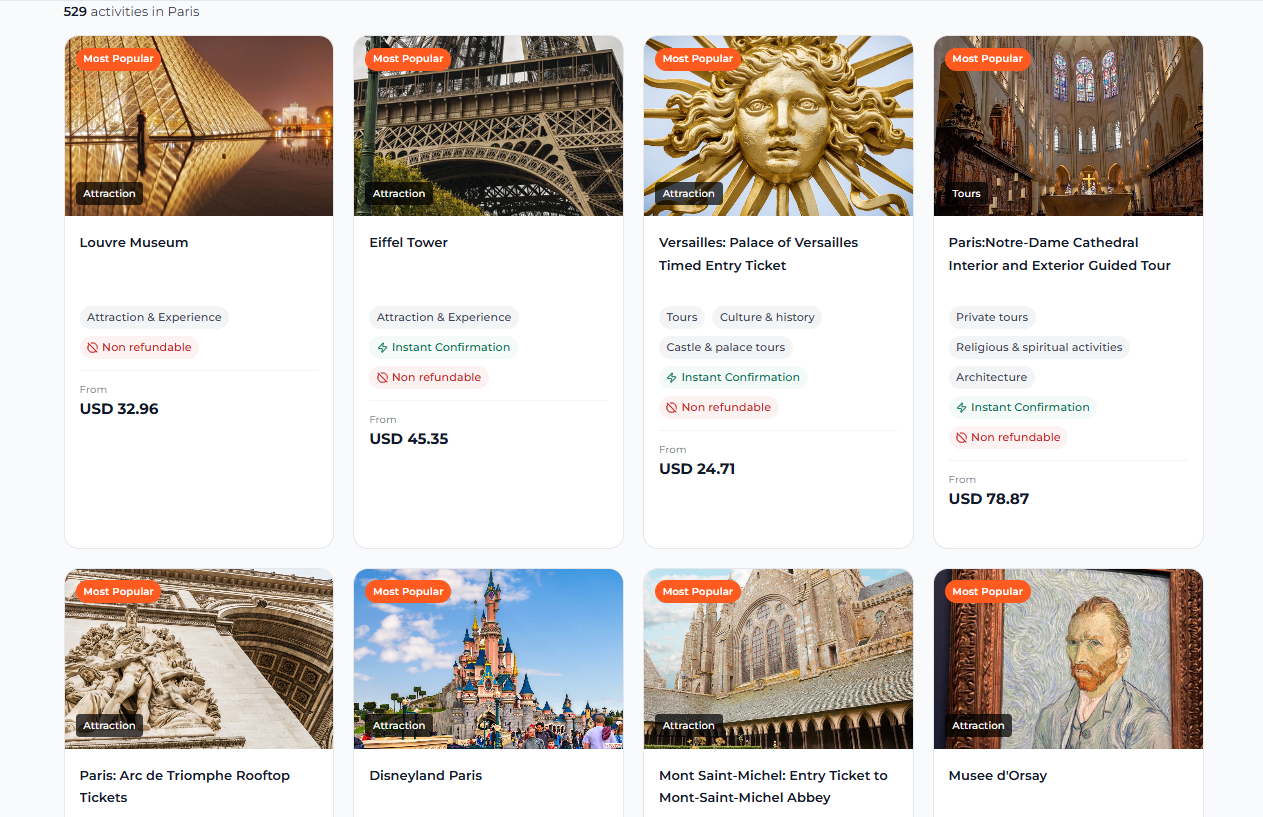
Together, these controls mean the catalogue isn't just a static list pulled from suppliers - it's actively curated to put the right activity in front of the right person at the right point in their search.
It's a small design choice with an outsized effect: it transforms an open-ended search into a guided one.
Full Control Over the Catalogue, Powered by TransitHub
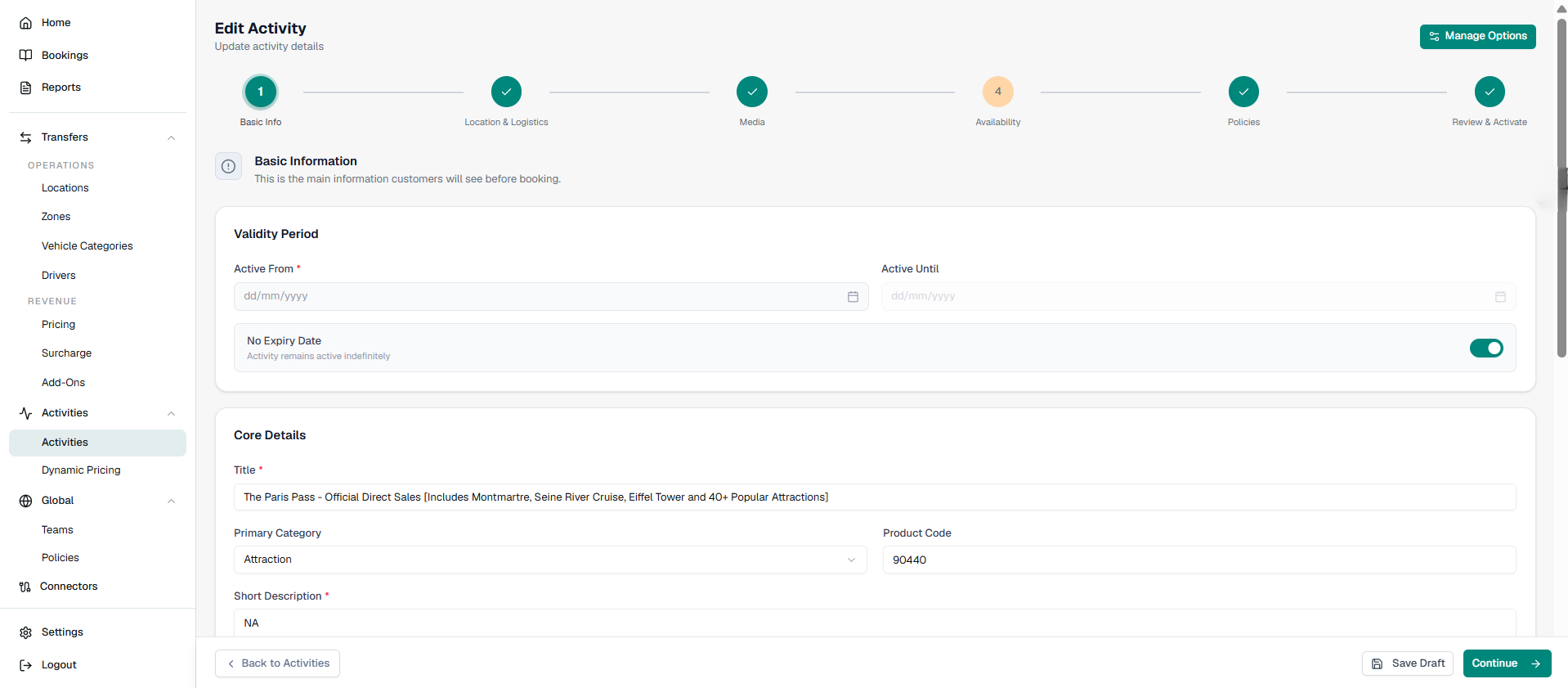
Behind every listing on Leamigo is an actively managed record - not a raw, unedited feed pulled directly from a supplier. We manage this through TransitHub's activity inventory management platform, which gives our content team direct control over how every activity appears:
-
Editing activity details and descriptions - so listings are clear, consistent, and free of the copy-paste inconsistencies that often come from raw supplier data.
-
Mapping activities to the correct city - ensuring an activity only appears where it's actually relevant, avoiding mismatched or misleading search results.
-
Adding and updating images - keeping visuals accurate and appealing rather than outdated or generic.
-
Toggling activity status on or off - so outdated, seasonal, or underperforming listings can be pulled from view instead of sitting there as dead weight in search results.
This isn't a one-time setup. It's ongoing curation - the catalogue is treated as a living asset that's continually refined, not a static list that's uploaded once and forgotten.
The Results: A Cleaner Catalogue, A Faster Path to Booking
Since rolling out this structured approach to cataloguing across key destinations, we've seen meaningful shifts in how agents interact with the platform:
| Metric | Before Structured Cataloguing | After Structured Cataloguing |
|---|---|---|
| Average time to select an activity | ~4.5 minutes | ~1.8 minutes |
| Search-to-booking conversion rate | 5% | 12% |
| Agent support queries related to listing confusion | 22% of total queries | 4% of total queries |
| Agent retention rate (30-day) | 34% | 47% |
Beyond the numbers, the qualitative shift has been just as important. Agents have told us that finding the right activity now feels less like sifting through a catalogue and more like getting a recommendation.
The bigger takeaway: Good inventory isn't just about having more supply. It's about presenting supply in a way that makes the right choice easy, right when it matters.
What This Means for Our Partners
For travel agencies and OTAs working with Leamigo, this translates directly into:
- Faster turnaround on activity bookings for clients
- Fewer errors from outdated or mismatched listings
- More confidence in recommending activities, backed by clear signals like popularity tags
- A catalogue that's maintained, not just uploaded and left alone
Good cataloguing doesn't shout for attention - but it's often the quiet difference between a browser and a booking.