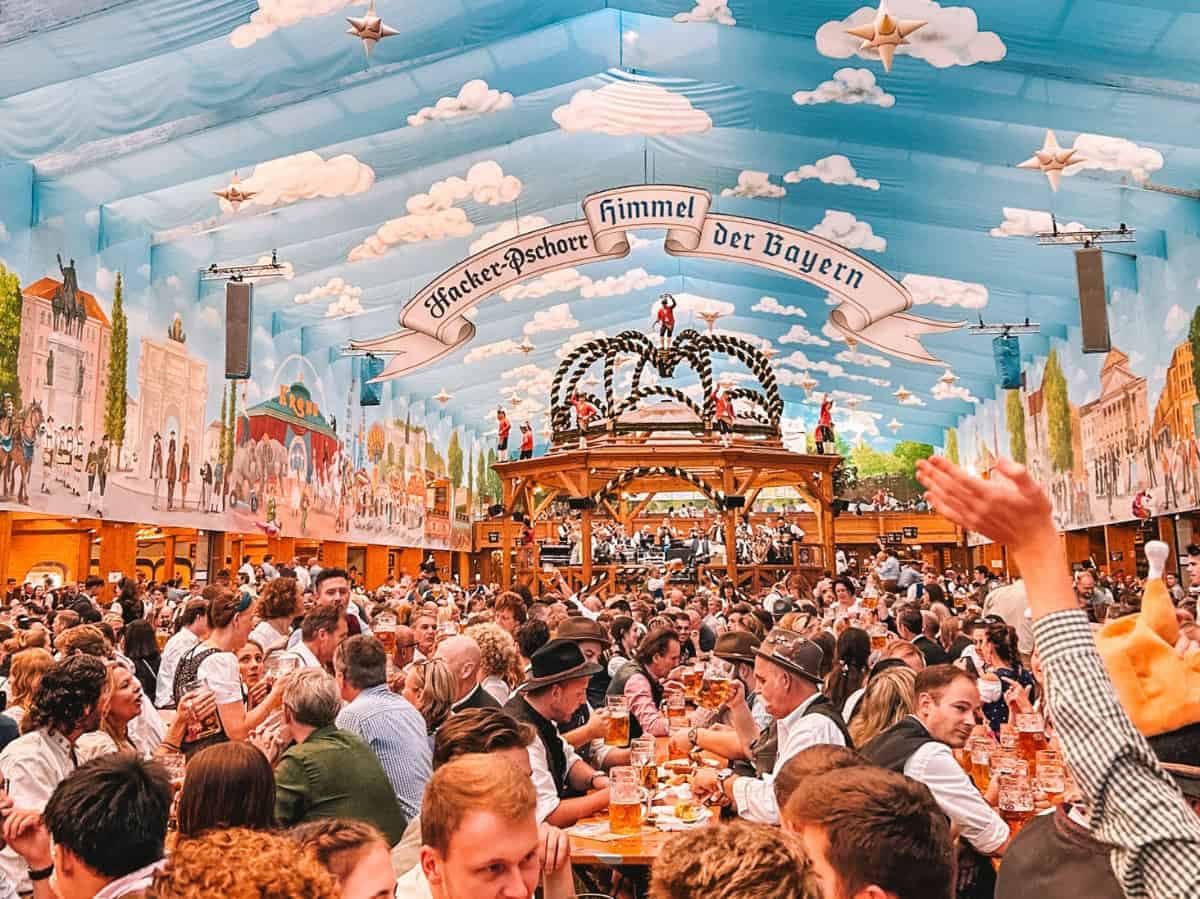
Oktoberfest in Munich 2026 runs from Saturday, 19 September to Sunday, 4 October 2026, 16 days of Bavarian beer, food, parades, and funfair rides. It is held at Theresienwiese, a large open meadow southwest of Munich's city centre, and is the world's largest folk festival, drawing around 6–7 million visitors each year. Entry to the grounds is free; you only pay for food, drinks, rides, and optional beer-tent table reservations (which are also free but must be booked directly with each tent months in advance). Despite its name, Oktoberfest in Munich starts in September because of milder late-summer weather.
Oktoberfest in Munich is more than a beer festival, it is a 200-year-old celebration of Bavarian culture that transforms the city into the party capital of the world for just over two weeks every autumn. Whether you are planning your first trip or simply curious about the tradition, this guide answers the most-searched questions about Oktoberfest in Munich, from exact dates and location to table reservations and history. If you want the definitive planning resource for Oktoberfest 2026, you are in the right place.
When Is Oktoberfest in Munich 2026?
The 191st Oktoberfest in Munich takes place from 19 September to 4 October 2026. It follows the traditional formula the city has used for decades: the festival begins on the Saturday after 15 September and ends on the first Sunday in October (extended to 3 October if that public holiday falls later). At 16 days long, Oktoberfest 2026 offers three full weekends of celebration.
The opening day is marked by two beloved ceremonies. At noon, the Mayor of Munich taps the first keg in the Schottenhamel tent with the famous cry of "O'zapft is!" ("It's tapped!"), and only then does beer begin to flow across the grounds. The following day features the traditional costume and riflemen's parade through the city.
For the official calendar and daily programme, the City of Munich's tourism portal (muenchen.de) and the official Oktoberfest website (oktoberfest.de) are the most reliable sources.
Looking ahead: For those already planning further out, Oktoberfest 2027 is expected to open on Saturday, 18 September 2027, following the same "third Saturday of September" rule.
Where Exactly Is Oktoberfest in Munich?
Oktoberfest in Munich is held on the Theresienwiese, a 42-hectare open meadow located southwest of Munich's city centre. Locals affectionately shorten the name to "die Wiesn," which has become a synonym for the festival itself.
The grounds are extremely easy to reach by public transport. The dedicated Theresienwiese U-Bahn station sits on Munich U-Bahn lines U4 and U5, and several other stations (Goetheplatz, Poccistraße, and Schwanthalerhöhe) are within a short walk. Because parking near the site is virtually impossible during the festival, taking the U-Bahn, tram, or S-Bahn is strongly recommended.
You can view the tent layout and entrance map on the official Oktoberfest grounds map. The meadow is dominated by the towering Bavaria statue and the Ruhmeshalle (Hall of Fame), both commissioned by King Ludwig I and worth a visit in their own right.
What Is Oktoberfest and Why Is It Celebrated?
Oktoberfest is the world's largest Volksfest (folk festival), combining a beer festival with a large travelling funfair. It is celebrated as a living tribute to Bavarian heritage, its food, its music, its traditional dress (lederhosen and dirndls), and its centuries-old brewing culture.
The tradition began with a royal wedding. On 12 October 1810, Crown Prince Ludwig of Bavaria (later King Ludwig I) married Princess Therese of Saxony-Hildburghausen. The citizens of Munich were invited to celebrate on the fields outside the city gates, and the festivities culminated in a grand public horse race. The event was such a success that it was repeated the following year, and the meadow was named Theresienwiese in the princess's honour. You can read the full origin story via HISTORY.com's account of Oktoberfest's origins and the official Oktoberfest history page.
Over the following decades the festival evolved: the Bavarian Agricultural Association took over organising, carnival booths appeared in the 1810s, and by 1896 Munich's breweries built the first large beer tents that define the modern Oktoberfest in Munich experience.
Why Is Oktoberfest in September? (And Why Is It Called Oktoberfest?)
It is one of the most common questions about Oktoberfest in Munich, and the answer is refreshingly simple. The festival is called Oktoberfest because the very first celebration in 1810 took place in October. Over the years, however, the start date was gradually moved forward into September to take advantage of the warmer, more reliable late-summer weather. Longer, milder September evenings make for a far more pleasant outdoor experience than a chilly Bavarian October.
So while the name honours its October roots, most of Oktoberfest 2026 actually happens in September, ending only in the first days of October.
Oktoberfest Tickets: Do You Need One?
Here is the good news that surprises many first-time visitors: there is no entrance fee for Oktoberfest in Munich. Access to the Theresienwiese grounds and to the beer tents is completely free. You only pay for what you consume, beer, food, souvenirs, and funfair rides.
What people often mean by "Oktoberfest tickets" is a beer-tent table reservation. Reservations themselves are technically free, but they usually require a minimum purchase of food and drink vouchers per seat, and they are in extremely high demand.
Beware of ticket resellers. Because official table reservations are free but hard to get, third-party brokers often sell them at inflated prices. Always book directly through the individual tent's official website. Independent trackers such as the Oktoberfest reservation guide document which tents still have availability.
How to Reserve a Table at Oktoberfest in Munich
With 17 large tents and 21 smaller tents, around 38 in total, securing a table at Oktoberfest 2026 takes planning. Here is how it works:
-
Book directly with the tent. Each of the large tents (Hofbräu-Festhalle, Schottenhamel, Hacker-Festzelt, Augustiner, Löwenbräu, and others) manages its own reservations through its own website. There is no single central booking system.
-
Know the timing. Most tents open their reservation requests between December and June in the year of the festival. Popular evening and weekend slots often disappear within days of release.
-
Understand the minimums. A reservation typically covers a full table (usually 8–10 people) and includes mandatory vouchers for beer and half a roast chicken per person.
-
Consider weekday visits. Weekday afternoons are far less crowded and easier to get into without a reservation. If you have no booking, arrive early in the morning to claim seats in the open (non-reserved) areas.
-
Try the Oide Wiesn. The nostalgic "Old Oktoberfest" section is generally easier to reserve and offers a more traditional, family-friendly atmosphere.
For the full breakdown of each tent and current availability, the official muenchen.de reservation guide is the most trustworthy starting point.
What Is the Best Time to Go to Oktoberfest in Munich?
The best time to visit Oktoberfest in Munich depends on the experience you want:
-
For a relaxed, family-friendly visit: Go on a weekday afternoon (Monday–Thursday). The tents are less crowded, it is easier to find a seat without a reservation, and the crowd skews more toward families. There is even a designated "quiet" period on weekday afternoons with softer traditional music.
-
For the biggest party atmosphere: Come on a weekend evening. This is when the tents are at full energy, brass bands, singing on the benches, and standing room only. Be warned: without a reservation, tents frequently close their doors once full.
-
For the ceremonies: The opening Saturday (keg tapping at noon) and the first Sunday (costume parade) are unforgettable but very busy.
-
For fewer crowds overall: The first weekday stretch after the opening weekend tends to be calmer than the second, final weekend.
Whenever you go, arriving earlier in the day always improves your chances of getting a good seat.
Is Oktoberfest in Munich Worth Visiting?
For most travellers, the answer is a resounding yes. Oktoberfest in Munich is a genuinely unique cultural experience, the scale, the history, the craftsmanship of the tents, and the sheer sense of shared celebration are difficult to find anywhere else in the world. Attracting 6–7 million visitors annually (a record 7.2 million in 2023), it is a bucket-list event for good reason.
It is worth visiting if you enjoy:
- Cultural immersion, traditional Bavarian dress, folk music, and food like pretzels, roast chicken, and Weisswurst.
- Atmosphere, the communal energy of a beer tent is unmatched.
- Beyond the beer, a full funfair with rides, games, and attractions makes it enjoyable even for non-drinkers and families.
It may be less ideal if you dislike large crowds or high prices during peak periods. But with a little planning, booking accommodation early, choosing your day wisely, and using public transport, Oktoberfest 2026 rewards visitors with memories that last a lifetime.
Quick Facts About Oktoberfest in Munich 2026
| Detail | Information |
|---|---|
| Dates | 19 September – 4 October 2026 |
| Edition | 191st Oktoberfest |
| Location | Theresienwiese, Munich, Germany |
| Getting there | U-Bahn U4/U5 (Theresienwiese station) |
| Entry fee | Free |
| Tents | ~38 (17 large, 21 small) |
| Annual visitors | ~6–7 million |
| First held | 1810 (royal wedding of Ludwig & Therese) |
| Reservations | Free, booked directly with each tent (Dec–Jun) |
Frequently Asked Questions
When is Oktoberfest in Munich 2026? Oktoberfest in Munich 2026 takes place from Saturday, 19 September to Sunday, 4 October 2026.
When is Oktoberfest in Munich 2027? Oktoberfest 2027 is expected to begin on Saturday, 18 September 2027, following the traditional third-Saturday-of-September start.
Where is Oktoberfest held in Germany? The original and largest Oktoberfest is held in Munich, Bavaria, on the Theresienwiese fairgrounds.
Do you need a ticket for Oktoberfest? No. Entry to the grounds and tents is free. You only pay for food, drinks, rides, and optional table reservations.
Why is Oktoberfest in September and not October? The start date was moved into September over the years to take advantage of warmer, more reliable weather, even though the festival is still named after its October origins.
How do I reserve a table at Oktoberfest? Book directly through each individual tent's official website, typically between December and June. Reservations are free but require minimum food and drink purchases and sell out fast.
Explore Munich Beyond Oktoberfest with Leamigo
While the beer tents are the headline, there is a whole city waiting to be discovered, and Leamigo makes it effortless to explore Munich alongside Oktoberfest 2026. Between festival days, use Leamigo to plan the rest of your trip: wander Marienplatz and the historic old town, tour Nymphenburg Palace, relax in the English Garden, or take a scenic day trip to Neuschwanstein Castle. With Leamigo you can build a personalised Munich itinerary, book stays and experiences, and make the most of every hour outside the Theresienwiese, turning a beer festival visit into a complete Bavarian adventure.
Planning your trip to Oktoberfest in Munich 2026? Bookmark this guide and always confirm the latest dates, tent details, and reservation windows on the official Oktoberfest website and the City of Munich tourism portal before you travel, and let Leamigo handle the rest of your Munich journey. Prost! 🍺