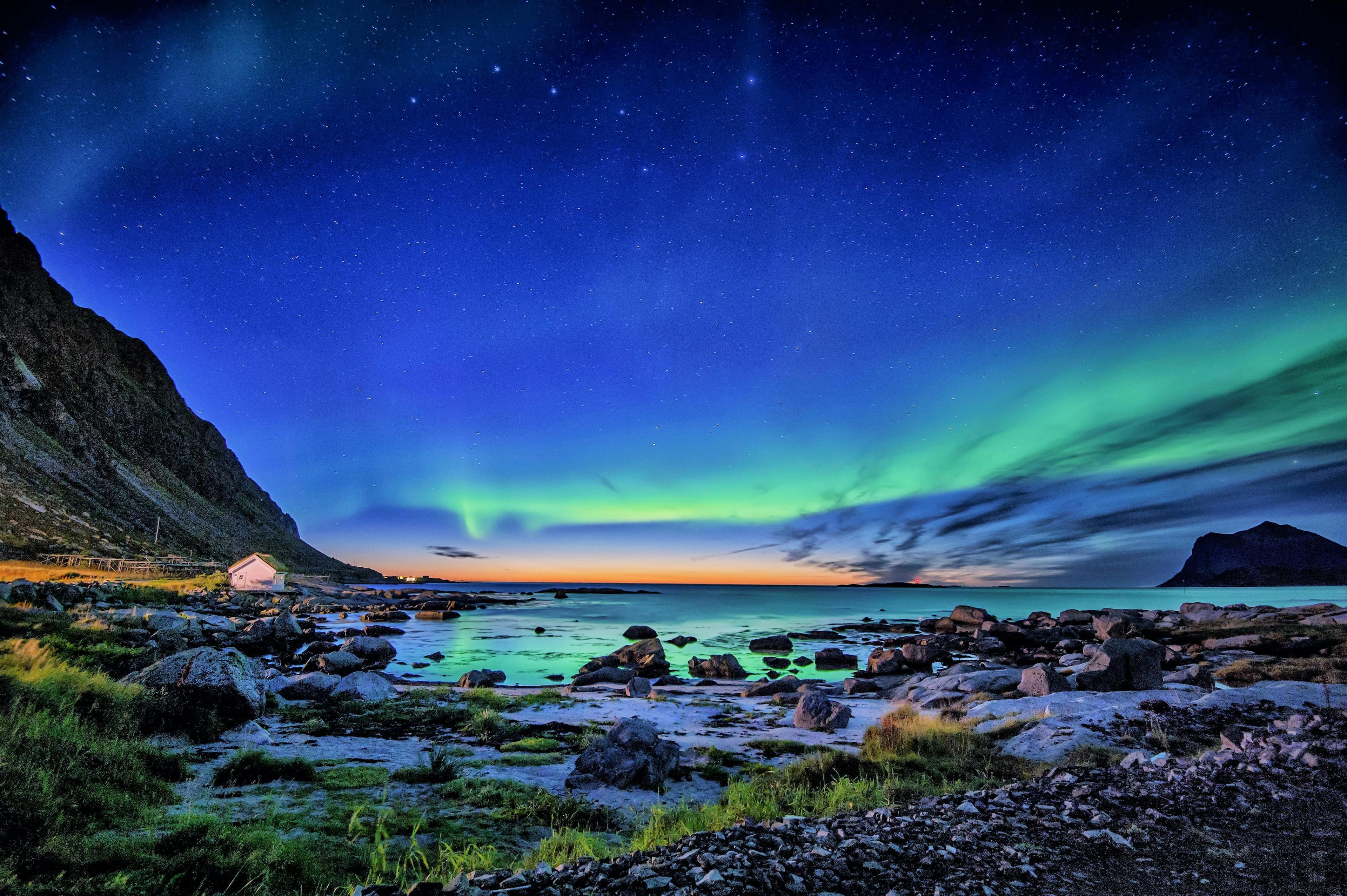
There's a moment aurora chasers talk about long after the trip is over, you're standing in the snow, breath fogging up in front of you, and the sky just... moves. Green light ripples overhead like someone's shaking out a curtain. Then it turns pink at the edges. Then it's gone, and you're left grinning at strangers you met an hour ago because there's genuinely nothing else to do with that much wonder except share it.
That's the Northern Lights, also called the Aurora Borealis, and if you've been putting off booking a trip to see them, this is the year to stop waiting. Solar scientists are calling 2026 one of the strongest aurora seasons in over a decade, which means the usual planning question ("will I actually see them?") has a better answer right now than it's had since the early 2000s.
This guide covers everything you need to book a trip in 2026: the best places to see the Northern Lights, the best months to go, why this particular year matters, and answers to the questions aurora hunters are actually typing into Google right now.
Why 2026 Is the Best Year to See the Northern Lights
The sun is unusually active right now, and that directly controls how strong and how frequent the aurora is.
Here's the science in plain terms. The sun runs on an 11-year activity cycle, and we're currently in Solar Cycle 25. Researchers expect this cycle to peak somewhere between 2024 and 2026, and early signs suggest it could be one of the most intense in decades. What's unusual about this particular cycle is that it appears to be showing a double peak, instead of one clean burst of activity, the sun is delivering two waves, which stretches out the prime aurora-viewing window well into 2026 rather than tapering off quickly. Solar Cycle 25 already produced record-breaking displays in 2024–2025, and even as the cycle eases into its declining phase, conditions through 2026 remain genuinely excellent.
What does that mean if you're planning a trip?
- Stronger displays: more vivid color, more movement, auroras visible overhead rather than just as a faint glow on the horizon.
- A wider viewing window: geomagnetic storms are showing up outside the "classic" peak months too.
- Better odds even with average luck: on a solar maximum year, even a middling night has a real shot at a decent show.
The catch: after this year, solar activity will steadily wind down, and the next comparable peak isn't expected until the mid-2030s. So if the Northern Lights have been sitting on your bucket list, the science is genuinely telling you not to sit on it any longer.
What Causes the Northern Lights?
Before you book anything, it helps to know what you're actually chasing. The Northern Lights happen when charged particles from the sun, carried on the solar wind, slam into gases in Earth's upper atmosphere, around 100 to 300 kilometers up. That collision releases energy as light, and the color depends on which gas is involved and at what altitude: oxygen produces the classic green (and red at higher altitudes), while nitrogen creates the blue and purple tones you sometimes see at the edges of a display. Earth's magnetic field funnels most of this activity toward the polar regions, which is exactly why you have to travel north (or south, for the aurora australis) to see it reliably. The more active the sun is, as it is right now, near the peak of Solar Cycle 25, the stronger and more frequent the collisions, and the more vivid the show.
Northern Lights Visibility at a Glance (2026)
A quick-reference table for planning, useful whether you're comparing months or comparing the best places to see the Northern Lights.
| Factor | Details |
|---|---|
| Best months overall | September to March, with the strongest activity around the September and March equinoxes |
| Best time of night | 9 PM – 2 AM local time; peak activity often falls between 11 PM and midnight |
| Best latitude band | 65°N to 70°N (the "auroral oval"), northern Norway, Swedish and Finnish Lapland, Iceland, and Alaska all sit in this zone |
| Best country for beginners | Norway (Tromsø), easy access, high latitude, frequent overhead displays |
| Best country for budget travel | Finland (Rovaniemi) and Swedish Lapland, generally lower accommodation and tour costs than Norway or Iceland |
| Ideal stay length | 2–3 nights minimum in one base location, to allow for cloud cover and off-nights |
| 2026 solar activity | Near the peak of Solar Cycle 25's double maximum, one of the strongest aurora years since the early 2000s |
| Visible from India | Not under normal conditions; only during extreme geomagnetic storms, and only from very high-altitude northern regions |
Month-by-Month Guide to the Aurora in 2026
August
The season opens quietly in the far north as nights start turning dark again after the long Arctic summer. It's not peak aurora season yet, but late August can deliver your first glimpse. Days are still mild, good for berry picking, hiking, or fishing before the cold properly sets in.
September
This is where the season really gets going, and it's one of the most underrated months to travel. The weather is still comfortable, the sun sets early enough in places like Tromsø and Rovaniemi that you're not staying up until 2 AM to catch a show, and you get the added bonus of autumn color and lakes that reflect the aurora back at you. Because it sits right around the equinox, geomagnetic activity tends to spike, the Earth's magnetic field lines up more favorably with the solar wind during this window, giving you a real statistical edge. Guided aurora tours and evening cruises are especially popular here.
October–November
Nights stretch out fast now, and your odds climb with them. Weather turns unpredictable, rain, early snow, the occasional clear, brutally cold night that turns out to be the best one of the trip. This window works well for reindeer encounters with Sami herders, campfire storytelling, and dog sledding on wheeled carts before the snow is thick enough for full sled runs.
December–January
Deep winter, and in parts of the Arctic the sun doesn't rise at all for weeks, meaning near-constant darkness and some of the highest odds of the year. This is peak snowmobiling, ice fishing, and cross-country skiing season, and it's when glass igloos and ice hotels really earn their reputation, you can watch the sky do its thing without leaving your bed. Rovaniemi's Santa Claus Village adds a festive layer if you're traveling with kids.
February–March
Days lengthen slightly but the nights stay dark enough for excellent viewing, and this window benefits from the same equinox boost as September – March auroras are consistently among the strongest and most frequent of the whole season. Afternoon sun is often warm enough to enjoy husky safaris, fat biking, snowshoeing, or a winter boat ride, and frozen lakes make for striking aurora reflections.
April
Early April can still surprise you, but by mid-month the nights shorten quickly as spring takes hold. It's a good window for ice caves and watching the Arctic landscape shift from winter white to early spring color.
May–July
Not aurora season, the far north barely gets dark enough at night to see anything, no matter how active the sun is. Save this window for midnight sun activities instead, and start planning your aurora trip for the following September.
Planning your aurora trip? Download our free Northern Lights 2026 Guide for a quick reference to the best months, destinations, viewing tips, and trip-planning essentials.
Best Places to See the Northern Lights in 2026
This is really the question that matters most once you've decided to go: where do you actually book? There's no single "best" place, it depends on the kind of trip you want, but a handful of destinations consistently top the list for 2026.
Tromsø, Norway. The most popular pick, and for good reason. Tromsø sits well inside the auroral oval, has excellent flight connectivity, and lets you pair aurora hunting with fjord cruises and dog sledding in the same trip. If you want a mix of dramatic scenery and reliable access, Tromsø is usually the easiest place to start.
Rovaniemi and Finnish Lapland. The more budget-friendly pick among the classic destinations, with glass igloos, husky safaris, and Santa Claus Village adding family appeal. Skies here are often clearer and less humid than coastal Norway, which can actually work in your favor when you're specifically hunting for visibility.
Reykjavik and the Icelandic countryside. Iceland pairs the aurora with landscapes you won't find anywhere else, black sand beaches, ice caves, geothermal springs, in a small, easy-to-self-drive country. It's a strong choice if you want the Northern Lights alongside a broader sightseeing trip rather than a dedicated aurora-only itinerary.
Abisko, Swedish Lapland. Quieter and less touristed than the big three, with excellent dark-sky conditions thanks to a unique local microclimate that keeps skies clearer than the surrounding region. Frequently cited as one of the single best spots on Earth for aurora visibility, though it takes a bit more effort to reach.
Fairbanks and the Alaskan interior. The go-to choice for US-based travelers, sitting directly under the auroral oval with reliably dark, clear winter skies and none of the transatlantic flight time.
If you're weighing Finland against Norway specifically: Norway tends to edge ahead on dramatic overhead displays and coastal scenery, while Finland edges ahead on affordability and family-friendly infrastructure. Neither is a wrong choice, it comes down to budget and the kind of trip you want built around the aurora itself.
Frequently Asked Questions
Which month is best for the Northern Lights? September and March, thanks to the equinox effect that strengthens geomagnetic activity, though the entire window from late August to mid-April can deliver a show, with December and January offering the darkest skies.
Which month is best to see the Northern Lights in Norway? September and March again top the list for Norway specifically, with December through February close behind for pure darkness. Tromsø sees aurora activity from late September right through late March.
Is Finland or Norway better for the Northern Lights? Norway generally offers more dramatic, higher-latitude viewing with strong tour infrastructure around Tromsø. Finland offers comparable viewing odds at typically lower cost, plus family-oriented extras like Santa Claus Village. Both sit well within the auroral oval, the choice comes down to budget and travel style rather than one being objectively "better."
Where are the Northern Lights most visible? Within the auroral oval, roughly 65°N to 70°N latitude. That band runs through northern Norway, Swedish and Finnish Lapland, Iceland, and parts of Alaska and northern Canada. During strong geomagnetic storms, like several expected in 2026, the aurora can appear well outside this band too.
Which is the cheapest country to see the Northern Lights? Finland and Swedish Lapland are typically the most affordable, with lower average accommodation and tour costs than Norway or Iceland. Norway can be booked economically too if you travel in shoulder season (September or late March) and choose smaller towns over Tromsø itself.
Can I see the aurora from India? Not under normal conditions, India sits far too close to the equator for regular aurora visibility. During truly extreme geomagnetic storms (the kind that happen only a handful of times per solar cycle), faint aurora has occasionally been reported from very high-altitude regions like Ladakh, but this is rare and not something to plan a trip around. For a reliable sighting, traveling to the auroral oval remains the only real option.
Where is the best place to see the Northern Lights in 2026? Tromsø in Norway and Abisko in Swedish Lapland are frequently ranked at the top for 2026 thanks to their combination of high latitude, low light pollution, and (for Abisko specifically) a local microclimate that tends to keep skies clearer than surrounding areas.
Can you see the Northern Lights in Alaska in September? Yes. September marks the start of Alaska's aurora season, as nights finally get dark enough again after the near-endless daylight of summer. Fairbanks, sitting directly under the auroral oval, is a reliable base, clear, crisp September nights combined with the equinox boost in geomagnetic activity make it one of the better opening-month windows of the year.
Can you see the Northern Lights in Iceland in September? Yes, September is generally considered the start of Iceland's aurora season. Nights are dark enough by early-to-mid September, and the weather is still relatively mild compared to peak winter, making it a popular choice for travelers who want the aurora without the harshest cold. Displays tend to strengthen further as the month goes on and into the equinox.
Whichever of these best places to see the Northern Lights you choose, plan for at least two to three nights at your base, cloud cover is the one variable no solar forecast can control, and a single night rarely gives you enough tries.
More Than Just the Sky: What Else to Do on an Aurora Trip
A Northern Lights trip rarely fills every hour with sky-watching, the daytime (and the hours you spend waiting for the show) matter just as much. Popular activities include:
- Dog sledding or snowmobiling across snowy terrain
- Reindeer encounters and Sami culture tours
- Ice floating in a safety suit on a frozen lake (a Finland favorite)
- Fjord boat trips and photography tours
- Hiking, biking, or kayaking (best in September, before the snow arrives)
- A night in an ice hotel or glass igloo
- Snowshoeing, cross-country skiing, and campfire evenings
- A visit to Santa Claus Village in Rovaniemi
- Local festivals, regional food, and photo spots that only show up once the snow settles in
How Leamigo Helps Agents Plan a Northern Lights Trip That Actually Delivers
If you're a travel agent building a Northern Lights itinerary for a client, the biggest risk isn't picking the wrong month, it's picking the wrong logistics. Leamigo takes that risk off your plate with:
- Transfers and chauffeur rentals that move clients smoothly between airports, hotels, and remote viewing spots
- A wide range of activities covering aurora tours, dog sledding, Sami experiences, and more
- Local guides who know exactly where the sky is clearest on any given night, away from the crowds
- Real cultural access, from Sami reindeer herding to regional traditions clients won't find in a standard package
- eSIMs so your clients can share the moment the second it happens
- 24/7 agent support and flexible, secure payment terms
For agents who'd rather hand clients a ready-made itinerary than build one from scratch, Leamigo journeys are worth knowing well this season. Book directly through Leamigo's own aurora offerings:
Chasing the Northern Lights: Oslo & Tromsø Winter Escape blends city charm with Arctic wonder over six days, Oslo sightseeing and a fjord cruise to start, then a flight north to Tromsø for a guided aurora chase, the Tromsø Ice Domes, and a run through the Tamok Valley. Private transfers and handpicked experiences throughout keep the logistics off the client's plate.
The 6-Day Iceland Winter Adventure covers the Golden Circle, the Katla Ice Cave, Jökulsárlón Glacier Lagoon, and a Sky Lagoon spa ritual alongside the aurora hunt itself, a well-rounded pairing of adventure and comfort for clients who want more than just a night of sky-watching.
Both work well as a starting template, agents can adjust pacing, add-ons, or accommodation tier through the Leamigo panel depending on the client's budget and travel style.