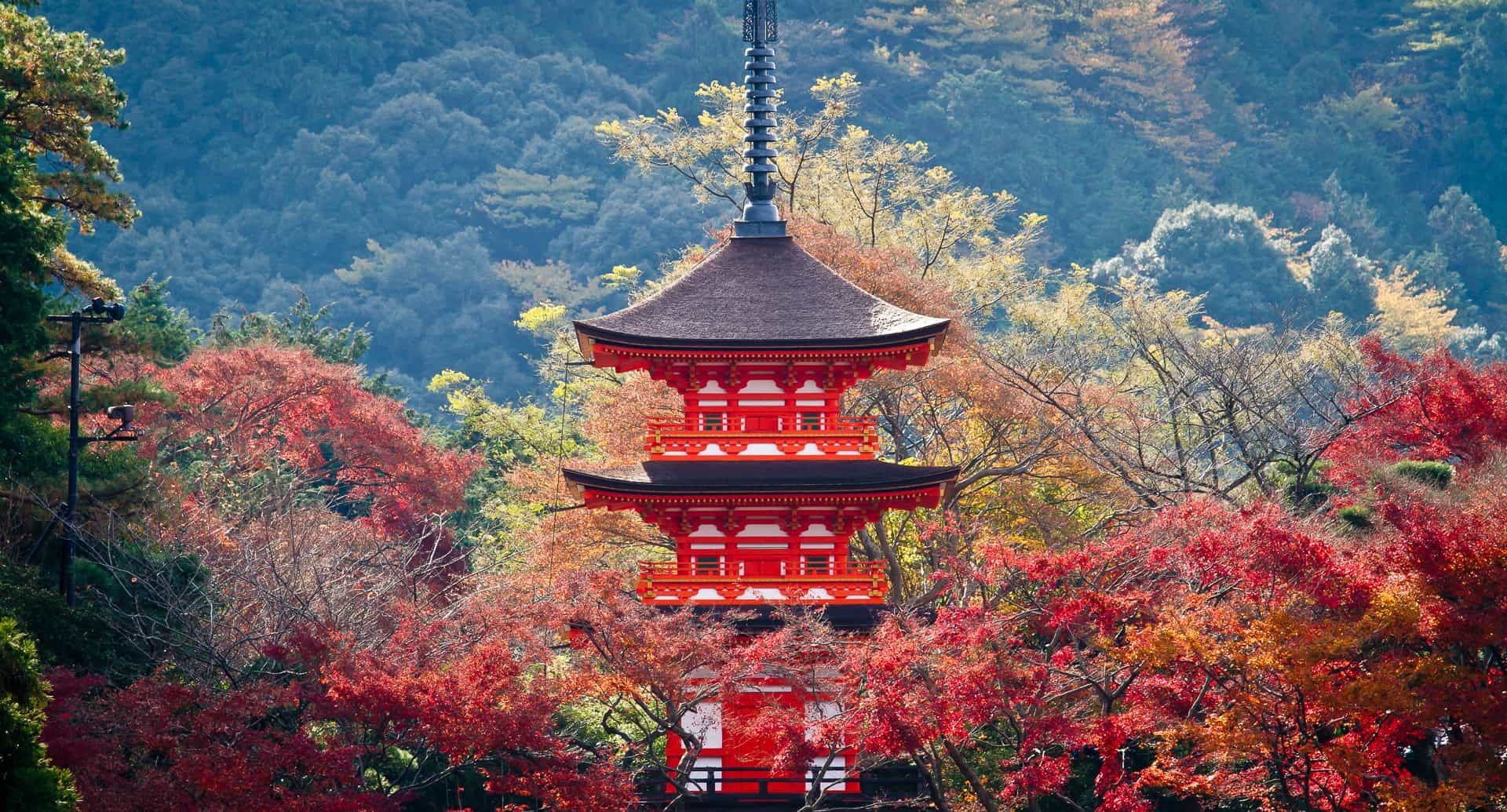
The best time to visit Kyoto for autumn leaves in 2026 is November 20 to December 7, when the maples hit peak red. Plan for 3–4 days, visit headline temples before 9 a.m., and save one evening for an illumination. Key facts at a glance:
| Question | Quick answer |
|---|---|
| Best time for Kyoto autumn leaves 2026 | Nov 20 – Dec 7 (peak ~Nov 23); early Dec if the autumn runs warm |
| Is October a good time? | Great weather and small crowds, but mostly still green, go higher (Kibune, Kurama, Ohara) for early colour |
| How many days do you need? | 3 days is sufficient for the highlights; 4 is comfortable |
| 2 or 3 nights? | 3 nights- 2 forces you to skip Arashiyama or the night illuminations |
| Top temples for fall foliage | Tofuku-ji, Eikando, Arashiyama (Tenryu-ji), Kiyomizu-dera |
| Best evening illumination | Eikando (also Kodai-ji, Kiyomizu-dera, Toji) |
| Kyoto autumn weather | Oct 18–24°C; Nov cooler, dropping toward 8°C at night; pack layers |
| Booking window | Reserve accommodation 6–12 months ahead; peak-week rooms sell out early |
Kyoto in the fall is, for many travelers, the single most beautiful version of Japan they will ever see. The ancient capital's thousand-plus temples, wooden machiya streets, and mountain-backed gardens were practically designed to frame red maple leaves. If you're chasing the famous Kyoto autumn leaves and drowning in conflicting advice about dates, crowds, and which temples are actually worth your limited time, this guide pulls it all together, timing, weather, itinerary, and honest answers to the questions everyone asks before they go. We'll cover the best time to visit Kyoto, where to find the most vivid Kyoto autumn colors, and how to plan a Kyoto fall trip that's rewarding rather than exhausting.
Why visit Kyoto in autumn?
Autumn is one of the two peak seasons to visit Kyoto, alongside the cherry blossoms of spring, and many regulars quietly argue Kyoto fall is the better of the two. The Japanese have a word for the tradition of chasing autumn colours, momijigari ("maple leaf hunting"), and Kyoto is its spiritual home. During the autumn foliage season in Kyoto, the leaves shift from green to fierce reds, golds, and oranges that contrast against dark temple timber and moss gardens, creating the melancholy, meditative beauty the culture prizes. The Kyoto autumn colors against ancient wooden halls are what draw photographers and pilgrims from all over the world.
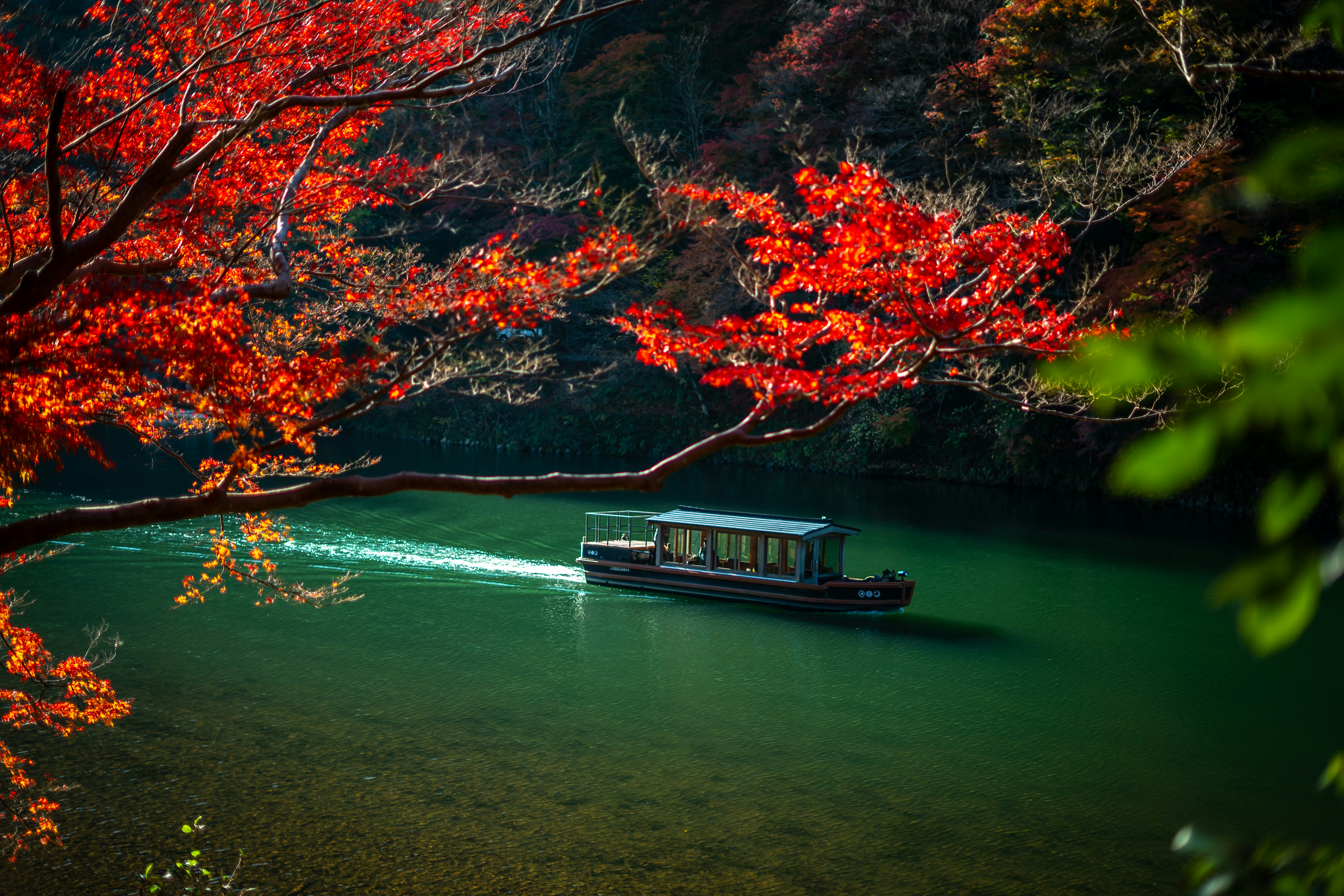
Beyond the leaves, the Kyoto fall season brings cool, clear, low-rainfall weather that's ideal for the long walking days Kyoto demands, seasonal food like matsutake mushrooms and kaiseki, and a series of special night illuminations you can't experience any other time of year. The trade-off is crowds, the Kyoto autumn leaves are popular for a reason, but with the right timing and an early-morning strategy, a Kyoto fall trip is genuinely rewarding rather than stressful.
When is the best time to visit Kyoto for autumn leaves? (2026 forecast)
This is the question that makes or breaks a fall foliage trip, so let's be precise. The best time to visit Kyoto for autumn colour is mid-to-late November, and here's how to pin it down.
For central Kyoto, the safest planning window for peak autumn leaves in 2026 is November 20 to December 7. Based on long-term averages, spots like Tofuku-ji and Arashiyama tend to reach their brilliant best around November 23, and the colour typically holds strong from late November into the first few days of December.
A few important nuances for the Kyoto autumn leaves forecast 2026:
- Colour arrives gradually, from high ground down. The mountains north of the city, Kibune, Kurama, and the Ohara valley, begin turning in late October, well before the central temples. If you're visiting earlier, head for elevation.
- Warm autumns push the peak later. The rule of thumb: maples start colouring when overnight lows drop below about 8°C, and really ignite around 5–6°C. Hot summers in 2024 and 2025 delayed the colour significantly, which is why early December may be unusually strong in central Kyoto if 2026 also runs warm.
- The colour season is long. Even if your dates miss the exact peak, Kyoto fall foliage stays vibrant for roughly a month, from early November to mid-December. If central Kyoto has already faded, look south and lower, Uji and Nara hold their colour later.
- Confirm with the official forecast. The Japan Meteorological Corporation releases its first national fall foliage forecast in early September, with updates roughly monthly through late November. Check it before finalising dates.
Bottom line: if seeing peak Kyoto autumn leaves is your top priority, aim for the last week of November through the first few days of December 2026.
Is Kyoto worth visiting in October?
Yes, but know what you're getting. October is arguably one of Kyoto's most pleasant months to be in the city, just not the month for peak fall foliage.
In October, Kyoto weather is comfortable and mostly sunny, with daytime highs around 18–24°C dropping to cool evenings near 13–16°C, and low rainfall once the early-month typhoon risk passes. Crucially, the summer heat and crowds have eased but the November foliage rush hasn't arrived, so headline sights like the Arashiyama bamboo grove and Fushimi Inari are at their least crowded in years. October mornings around the bamboo grove can be cool and foggy, atmospheric in a way November never is.
The catch: as of late October, only about 5% of the maples have turned red; the rest is still green. So if your mental image is temples buried in crimson leaves, October will disappoint. The workaround is to head to higher elevation, Kibune, Kurama, and the Ohara valley (Sanzen-in) begin colouring by late October, where you can catch early autumn colour with a fraction of November's crowds.
October also delivers two of Kyoto's best festivals on the same day, October 22: the Jidai Matsuri (Festival of the Ages) historical procession and the dramatic Kurama Fire Festival that evening.
Verdict: Visit Kyoto in October for comfortable weather, small crowds, festivals, and early mountain colour. Visit in November for the full fall foliage spectacle.
How many days do you need in Kyoto?
Short answer: three to four days is the sweet spot, and for an autumn trip specifically, three full days is close to ideal.
Is 3 days in Kyoto too much? Not at all. Three days is the most common length of stay for a reason, it's enough to cover the essentials without exhausting yourself, and it's the minimum most guides recommend for the Kyoto autumn leaves circuit. Three to four days lets you cover eastern Kyoto (Higashiyama), the Tofuku-ji/Fushimi Inari area, Arashiyama, and one northern or evening-illumination day.
Is 3 days enough to see everything in Kyoto? Honestly, no, but nothing is. Kyoto has well over a thousand temples and shrines, and even locals never finish it. What three days is enough for is the highlights: the headline temples, the best Kyoto autumn colors, one bamboo grove, one illumination, and a proper wander through the old streets of Gion. Go in accepting you'll leave things for "next time," and three days feels generous rather than rushed. If your goal is to see literally everything, you'd need weeks, not days.
Is it better to spend 2 or 3 nights in Kyoto? Three nights, without much hesitation, especially in autumn. Two nights really only gives you one full day plus two partial ones, which forces you to choose between Higashiyama and Arashiyama and skip evening illuminations entirely. A third night unlocks a second full day, so you can do the eastern temples and Arashiyama and a night light-up without sprinting. If two nights is all you have, prioritise Higashiyama (Kiyomizu-dera, Gion) on your one full day.
How many days are sufficient in Kyoto? For a focused autumn trip, three days is sufficient and four is comfortable. Fewer than two full days and you'll feel you only skimmed it; five or more and you can add day trips to Uji, Nara, or the northern mountains (Kibune, Kurama, Ohara) where the fall foliage lingers or arrives early. What genuinely doesn't work is trying to do Kyoto autumn in a single day, the sights are spread across the city, and the winning strategy of early mornings and one area at a time needs room to breathe.
A 3-day Kyoto autumn itinerary
This route clusters sights by geography to minimise transit and builds in early starts to beat the crowds, the single most important tactic for a Kyoto fall foliage trip.
Day 1: Higashiyama (Eastern Kyoto) & Gion
- Kiyomizu-dera at opening (around 6–8 a.m.). Its wooden stage floating above a sea of red maples is one of Japan's most photographed autumn scenes, and it's tolerable only if you arrive early.
- Walk down the historic Sannenzaka and Ninenzaka lanes, then through Maruyama Park (gorgeous momiji reds) to Yasaka Shrine.
- Kodai-ji and the Gion district in the afternoon. Focus on Hanamikoji and Shirakawa streets.
- Evening illumination at Eikando or Kodai-ji (see the illuminations section below).
If you'd rather have a guide connect these dots for you, this Kyoto Autumn Day Tour: Nanzen-ji Red Maple, Nijo Castle, Gion & Nishiki Market covers the season's best red-maple spot at Nanzen-ji plus Gion and Nishiki Market in a single day, a strong fit for a Day 1 that leans into Kyoto autumn colors. History-minded travelers can instead pair the city's two great landmarks on this Kyoto Imperial Palace & Nijo Castle Guided Walking Day Tour.
Day 2: Arashiyama
- Arashiyama bamboo grove before 8 a.m., non-negotiable for photos without crowds.
- Tenryu-ji, a UNESCO World Heritage temple whose Sogenchi garden and red-leaf-meets-green-bamboo views are Arashiyama's finest.
- The Togetsukyo Bridge panorama and a stroll along the river; consider the Sagano Romantic Train or a Hozu River boat ride (book the open-air train early in foliage season).
- Quieter alternatives nearby: Hogon-in and Hokyo-in temples.
To go beyond the crowded main path, this Otagi Nenbutsu-ji & Arashiyama Bamboo Forest Walking Tour adds the moss-covered stone figures of Otagi Nenbutsu-ji, a magical, little-visited temple in upper Arashiyama that's especially atmospheric under autumn leaves.
Day 3: Tofuku-ji, Fushimi Inari & a northern option
- Tofuku-ji at opening. The view from Tsutenkyo Bridge over a valley of maples is the classic Kyoto autumn crush, go before the gates open on a weekday and leave before the tour buses land. Expect special entry rules and higher fees in peak season.
- Fushimi Inari and its thousands of vermilion torii gates, hillside colour included.
- If you have energy or a fourth day, add a northern half-day at Kibune/Kurama or the Ohara valley (Sanzen-in) for a quieter, mountain-forest take on Kyoto fall foliage.
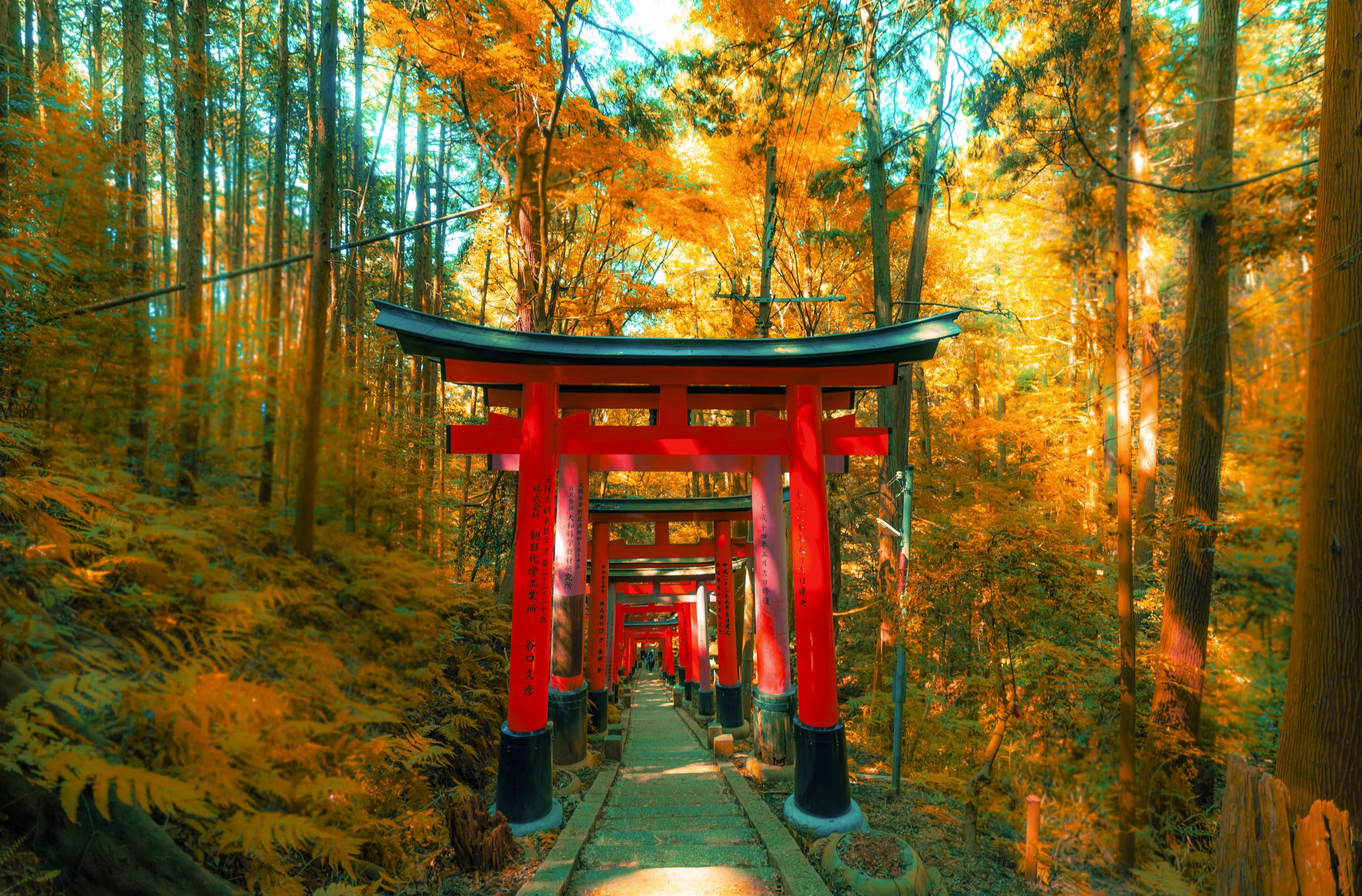
Short on time and want the marquee sights in one guided sweep? This 1-Day Kyoto & Nara Tour: Arashiyama Bamboo Grove, Fushimi Inari Taisha & Nara Park bundles Fushimi Inari with a Nara day trip, a smart option if you're stretching to a fourth day or want Nara's later-turning autumn foliage in the same outing.
Best places to see autumn leaves in Kyoto
The autumn foliage in Kyoto is spread across the city, so knowing exactly where to point yourself matters. If you only remember a handful of names, make it these:
- Tofuku-ji, Kyoto's most iconic daytime foliage view from Tsutenkyo Bridge. Peaks around November 20–30. Expect crowds; arrive at opening.
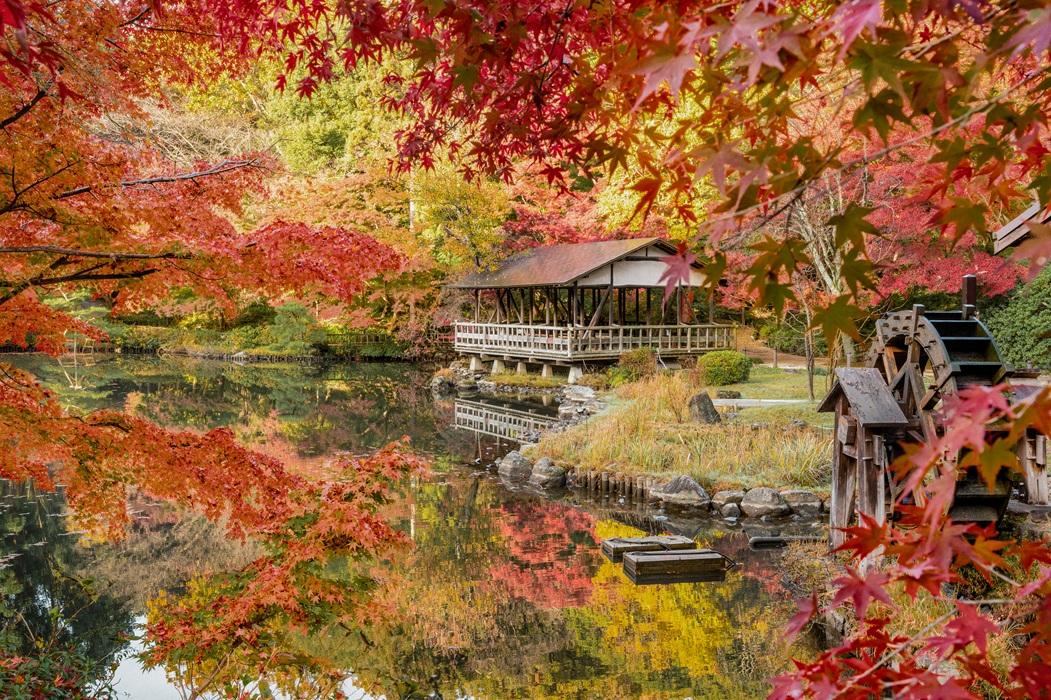
- Eikando (Zenrin-ji), "Eikando of maples," with roughly 3,000 maple trees, a reflecting pond, and pagoda. The best all-around choice for an evening illumination.
- Arashiyama, river scenery, Tenryu-ji, the bamboo grove, and the Togetsukyo Bridge in one district.
- Kiyomizu-dera, the hillside stage over a maple valley; a must-see, best at dawn or during its night opening.
- Ruriko-in, famous for reflections of autumn leaves on lacquered tables (limited seasonal opening; check ahead).
- Kibune, Kurama & Ohara (Sanzen-in), northern, higher-elevation spots that colour earlier (late October to mid-November) with fewer crowds.
- Uji & Nara, south of the city, where colour lingers later into December.
Kyoto autumn illuminations 2026 (night viewing)
Special night light-ups are one of the great pleasures of a Kyoto autumn trip, and they run only for this season, roughly late October through mid-December, peaking mid-November to early December. Most open around sunset, close by 21:00–21:30, and charge a separate evening admission. A few require reservations; most don't. Top picks:
- Eikando, the best first choice; pond, garden, and maple slopes glow after dark.
- Kodai-ji, a high-tech projection show plus an illuminated bamboo forest; runs one of the longest seasons (late October to early December).
- Kiyomizu-dera, its illuminated stage over glowing leaves is unforgettable; extended evening hours in season.
- Kitano Tenmangu, the Momiji Garden along the Kamiyagawa River, a good west-side evening.
- Toji Temple, its five-storey pagoda (Japan's tallest wooden tower) reflected in Hyotan Pond, lit red.
- Chion-in, the massive Sanmon gate lit up; pairs with a Higashiyama walk.
Tip: don't try to cram a full day of temples and a light-up. Do a daytime temple elsewhere, rest, then commit your evening energy to one illumination.
Which part of Japan is best to visit in autumn?
Kyoto is the marquee answer, but timing depends on region because the colour sweeps south and downhill across the country:
- Late September to mid-October: Hokkaido, Tohoku, Nikko, and the Japanese Alps, the north and the highlands turn first.
- Mid-November to early December: Tokyo, Hakone, Lake Kawaguchi (Mt. Fuji), Kyoto, and most of western Japan, the sweet spot for first-time routes.
- Into December: southern spots and sheltered gardens (Uji, Nara, Kyushu) hold colour last.
A popular first-timer's autumn route runs Tokyo → Hakone or Lake Kawaguchi → Kyoto, saving Kyoto for the end when its colour peaks. For a pure fall foliage trip, Kyoto is the best single base in Japan, nowhere else concentrates this many world-class autumn temples in one city.
What is the prettiest part of Kyoto?
It depends on what moves you, but the consensus favourites are:
- Higashiyama (Eastern Kyoto), the most atmospheric district, threading Kiyomizu-dera, the Sannenzaka/Ninenzaka lanes, Maruyama Park, Kodai-ji, and Gion. In autumn it's arguably the prettiest part of Kyoto for the sheer density of beauty per step.
- Arashiyama, the most scenic for nature: river, mountains, bamboo, and Tenryu-ji together.
- Tofuku-ji's Tsutenkyo Bridge, the single prettiest view of Kyoto autumn leaves.
- The Philosopher's Path, linking Nanzen-ji and Ginkaku-ji, is a lovely quieter walk (best known for cherry trees but pleasant in fall too).
If forced to choose one for an autumn trip, Higashiyama wins for its blend of temples, traditional streets, and momiji.
Kyoto fall weather & what to pack
Weather is a big part of picking the best time to visit Kyoto. The city sits in a basin, which gives it big day-to-night temperature swings, exactly the condition that produces such vivid maples, and something to dress for:
- October: highs around 18–24°C, cooler evenings near 13–16°C, mostly sunny; slight typhoon risk early in the month.
- November: bright days around 15–17°C early in the month, dropping steadily; nights get cold (down toward 8°C). Drier than October.
- Early December: can feel wintery, though some leaves are still at their best.
Pack: comfortable walking shoes (temple days are long, and wet temple wood is slippery), layers, and a warm coat plus thermals for evening illuminations. Days shorten fast in autumn, it can be dark by 17:00 in late October, so start early to maximise daylight.
Crowd-beating & booking tips
- Arrive at opening. Visit Tofuku-ji, Arashiyama, and Kiyomizu-dera around 7:00–8:30 a.m. It's the single biggest difference between a magical morning and a shoulder-to-shoulder slog.
- Book accommodation 6–12 months ahead. Kyoto ryokan at the late-November peak sell out up to a year in advance.
- Reserve the Sagano Romantic Train early if you want the open-air car in foliage season.
- Weekdays beat weekends, especially at the famous bridges and stages.
- Have a Plan B. If central Kyoto has peaked or faded, pivot to Uji, Nara, or the northern mountains.
Frequently asked questions
When is the best time to visit Kyoto for autumn leaves in 2026? The best time to visit Kyoto for peak colour is late November, the safest window in central Kyoto is November 20 to December 7, 2026, with the last week of November often ideal. A warm autumn could push the best Kyoto autumn colors into early December.
Is October too early for Kyoto fall foliage? For central Kyoto, mostly yes, it's still largely green until the last days of the month. But higher-elevation spots like Kibune, Kurama, and Ohara begin colouring in late October, and October offers great weather and small crowds.
How many days do I need in Kyoto for autumn? Three to four days is ideal, enough to cover Higashiyama, Arashiyama, the Tofuku-ji/Fushimi Inari area, and one illumination or northern day. Three days is sufficient for the highlights; four is comfortable.
Is it better to spend 2 or 3 nights in Kyoto? Three nights. Two nights leaves you only one full day and forces you to skip either Arashiyama or the evening illuminations. A third night gives you a second full day to see the autumn leaves without rushing.
Where are the best autumn illuminations in Kyoto? Eikando is the top all-around choice, with Kodai-ji, Kiyomizu-dera, Toji, and Kitano Tenmangu also excellent depending on your route.
Which is prettier, Kyoto in spring or autumn? Both are stunning. Spring brings cherry blossoms; autumn brings fall foliage, cooler weather, night illuminations, and a longer viewing window. Many repeat visitors prefer autumn.
Autumn is the season Kyoto was made for. Time your trip for the peak, start your mornings early, and give the city three unhurried days, and the autumn foliage in Kyoto will give you the version of Japan that ends up framed on your wall.